Blog | An Interview with Peace Sakulclanuwat
Category: For Fun
Published: July 25, 2026
Peace Sakulclanuwat is a educator at Coffee Project New York. She has competed in the US brewerss Cup four times since 2018 and ranked in the top three twice. Born in Thailand and a longtime New Yorker, Peace regularly features coffee from Thailand on the competition stage.
When did you start drinking coffee?
I think I started drinking coffee when I was…ten? Ten years old. And it’s Thai coffee, so it’s hot with a lot of condensed milk. At the time, it was just a drink that would make me stay up during exams in school. Growing up—a little bit older—I wanted to become fancy. So, I started going to Starbucks to order Frappuccinos. Little did I know, a Frappuccino doesn’t have any coffee, just syrup and sugar…
When did you start competing? Why?
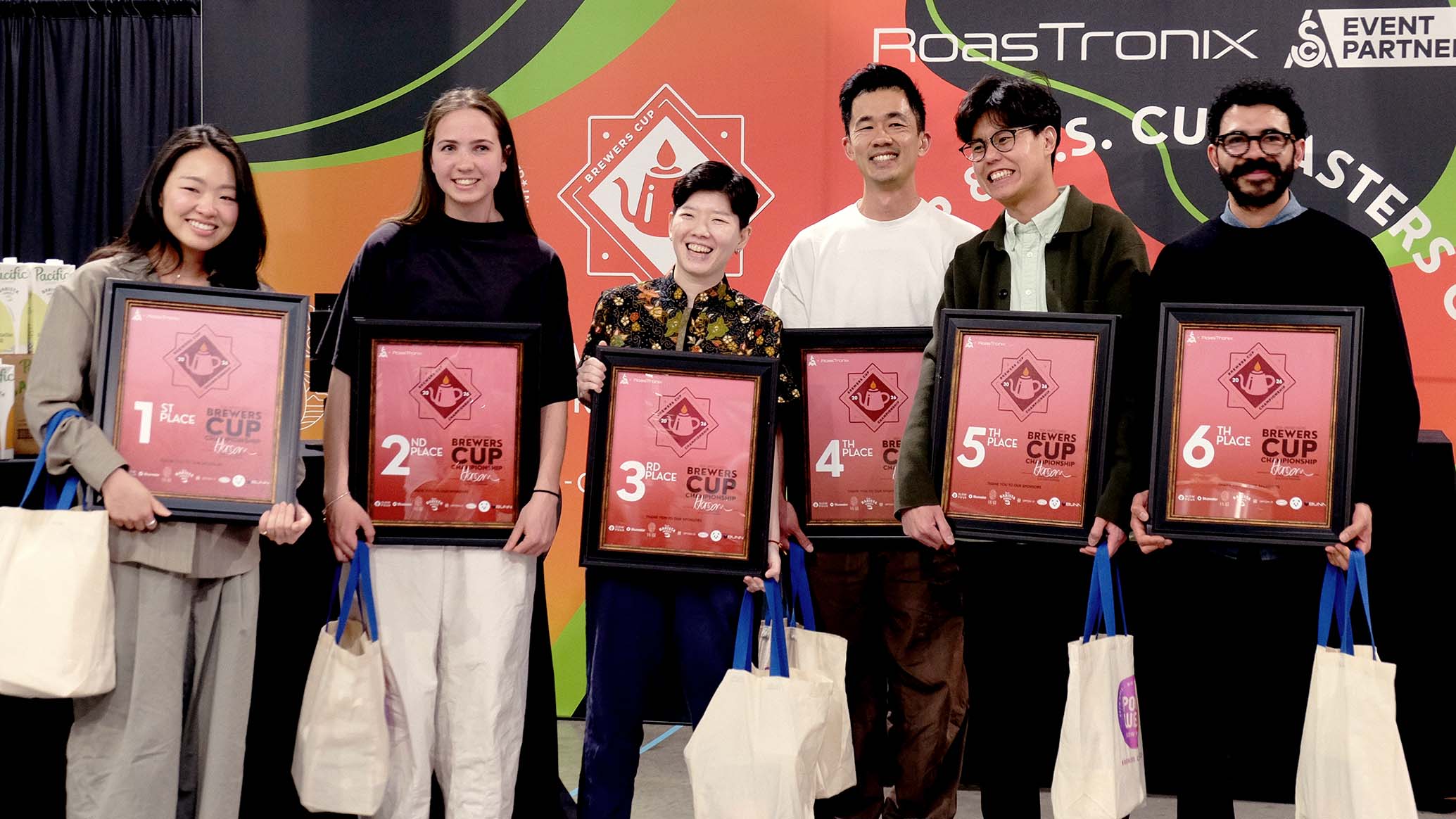
I first competed in the Brewers Cup in 2018. The first time I competed, I placed 17th in nationals, then the second year, I placed 13th, and in 2024, I placed second. This year, I placed third in nationals.
The reason I got myself into competition at first is because I wanted to get over my nerves. I wanted to know what else I could do outside of the café. Because in coffee, there are only so many options you can grow yourself into, especially at a professional level. And when the competition came around, I just wanted to try it out just to see if it’s something that I could pursue long-term.
The first year went, I felt like I could do more. I felt like I could improve to do better each year, and that’s how I kept competing.
How do you represent Thailand on the competition stage?
I feel special and unique. That is also part of the reason why I wanted to compete, and why I wanted to continue in the coffee industry. Because Thailand is one of the growing regions, and we grew a lot of coffee, but not a lot of people get to taste Thai coffee outside of Thailand.
As a Thai barista who lives in the U.S., I want to bring that part of my heritage and that part of my culture to the U.S., which is my second home now, for the people here to see and taste it: how delicious Thai coffee can be.
When I started talking to a lot of Thai producers back home, the main goal was just to produce coffee to serve within the country. For them, it’s always something that they have growing up, drinking and enjoying. They never considered trying to import or export coffee outside the country until lately, when competition became a big scene in Thailand and a lot of Thai baristas back home started using Thai coffee on the competition stage.
I think that’s what’s special about it—it’s because, to me, Thai coffee is very rare and it’s very exotic until today. It has a special place in my heart.
What has your experience been like in competition? How has it changed over the years?
Based on my experience in competition, there is a limitation on the flavor calls that we can do for certain calls, just because we need to be considerate and understand our judging panels. Most of the judging panels are used to Western fruit flavor calls, rather than like, being used to, like, exotic or tropical fruits. So let’s say you want to call dragonfruit. I can’t just call out, “my coffee tastes like dragonfruit,” I need to explain a little bit further: how does it taste, and try to tie it back to the Western fruit that most of the judges are familiar with.
[Competitions are becoming] more diverse in terms of judging panels, more diverse in terms of competitors, so we start to see a lot of new faces and a lot of people who try to be innovative and brewing a lot more coffee from a place or country we’ve never heard of before. So, like me, I brought in Thai coffee to the stage. I feel like there’s a lot more going on in the coffee industry now that people don’t know about, and competition is a place where we can start new ideas, new innovations, and try to move the industry forward. So, we’re some of the few people that try to inject this coffee that you’ve never heard of to be more visible.
You’re an instructor at Coffee Project NY. What’s challenging and rewarding about being a coffee teacher?
I teach Barista Intensive and Pour Over Intensive, and train new hires and wholesale clients. At first, I was always thinking, “Do I know enough? Do I have enough knowledge to share with this group of people who are paying to be in my class?” But, after that, I think the most challenging part is what type of group you’re going to get that day. I think I’ve learned well how to read the room and the students I have for the day.
For me, my job as a teacher is to blend in with them. You’re not supposed to show or act like you’re better than them, because everybody here is trying to learn from you. How are you going to be able to translate the knowledge that you know to make sure that they understand on the same page as you?
The most rewarding part is to see all the students who take my Barista class walk out with a heart on their latte. <3
[Students often teach me about] new brewing gear and new brewing techniques that I haven’t really caught up on, or other things going on in the industry. As a coffee professional, my job is to make sure that I’m responsible for my day-to-day tasks. Not that we’re not nerdy enough, but we don’t have a lot of time to follow what’s on trend in the market. So every time a student approaches me like, “Have you heard about this brewer?” or “Have you heard about this ratio that this person is doing?” or “Have you heard about this screen?” Honestly, my answer is no, I don’t know, but I’m happy to learn more.
LIGHTNING ROUND
Espresso or drip? Drip.
Cold brew or iced pour over? Iced pour over.
Gesha: underrated or overrated? Whoo! Could be either/or.
Robusta: underrated or overrated? Underrated!
Dark, medium, or light roast? Medium.
Conical or flat dripper? Conical.